
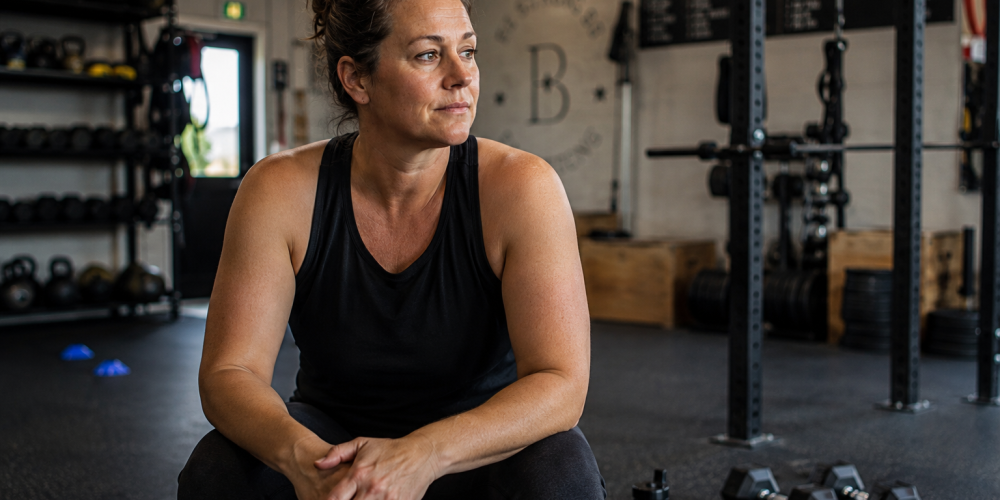
Somewhere around the middle of winter, the mirror starts getting blamed.
Not because anything dramatic happened overnight. Just… nothing seems to be changing.
You’ve been trying.
Walking more.
Trying not to snack every night.
Making a better lunch here and there.
Then one morning you’re pulling on the same jeans and they still feel exactly the same.
It’s frustrating because effort and results don’t seem to be speaking the same language anymore.
Around Bailey’s Bodies Fitness, this is the time people quietly start asking, “Is any of this actually working?”
And honestly… I get it.
When progress feels invisible, the brain starts looking for shortcuts again. Maybe eat less. Maybe do more cardio. Maybe skip dinner because yesterday wasn’t exactly brilliant anyway.
Most people aren’t losing motivation. They’re losing evidence that what they’re doing is working.
What Most Advice Gets Wrong
Most advice still sounds like it did twenty years ago.
Burn more calories.
Do more cardio.
Eat less.
Push harder.
Except life isn’t the same anymore.
You’ve got work. Family. The house. Maybe parents needing more help than they used to. Maybe your own body feels different too. The recovery isn’t quite the same. Sleep isn’t always great. One rough night and somehow the pantry starts sounding like a reasonable idea by eight o’clock.
Poor sleep changes hunger pretty quickly. Which is why the biscuit tin suddenly becomes fascinating after a couple of ordinary nights.
It’s not a discipline problem.
I’ve had people swear they hadn’t really eaten much over the weekend. Then we slowly unpack Saturday. Half a sausage while cooking lunch. A few chips from someone else’s plate. Leftover nuggets eaten standing at the bench because nobody wanted to waste them. A couple of handfuls of crackers while deciding what to make for dinner… then takeaway because nobody could be bothered.
Nobody was binge eating.
They were just tired.
Then they blame themselves.
People keep trying to fix exhaustion with stricter rules.
That’s usually where things get worse.
If this sounds familiar, you might also recognise some of the patterns in Why Stress Starts Showing Up On Your Body Even When You’re “Trying”
What’s Actually Happening Beneath The Surface
Bodies change.
Not all at once.
Just enough that the things which worked ten years ago slowly stop working quite as well.
One of the biggest changes is muscle.
Without meaning to, most adults gradually lose muscle as they get older. Less muscle means everyday life feels a bit harder, recovery takes longer, and the body doesn’t use energy quite the same way it once did.
That’s where strength training becomes different.
It’s no longer just something people do to get toned or build bigger muscles.
It’s helping protect the engine underneath everything else.
The thing is… people often can’t see those changes straight away.
You might be lifting a little heavier than six weeks ago.
Walking upstairs without puffing quite so much.
Sleeping a fraction better.
Feeling steadier getting off the couch.
The scales couldn’t care less about any of that.
The body is often improving long before the mirror decides to join in.
And because those improvements are quieter, people talk themselves out of continuing.
That’s a shame.
Because they’re usually closer than they think.
There’s another conversation worth reading too: How To Become Someone Who Does Not Quit
The Hard Truth
Waiting until you feel motivated usually means you’ll be waiting a long time.
Perfection has probably cost you more progress than missing a few workouts ever has.
Feeling guilty doesn’t burn a single extra calorie.
Practical Shifts That Make This Easier
Instead of asking whether you’ve lost weight this week…
Ask whether you’re becoming stronger.
Can you carry the groceries more easily?
Can you get off the floor without thinking about it?
Are you finishing the afternoon feeling slightly less wrecked?
Those wins matter more than people realise.
Strength training doesn’t have to mean living in a gym, either.
Two or three sensible sessions each week. Some walking. Enough protein. Reasonably decent sleep when life allows it.
That’s actually pretty powerful.
Not exciting.
Just reliable.
Consistency usually looks a lot more ordinary than people expect.
If you’re finding it hard to know where to start, or you’re second-guessing whether you’re doing enough, that’s exactly where having a bit of structure helps. At Bailey’s Bodies Fitness, a lot of the coaching isn’t about pushing people harder. It’s helping them stop changing direction every second week.
Because constantly starting over is exhausting.
Maybe the biggest shift isn’t learning how to train harder.
Maybe it’s understanding that your body isn’t broken.
It’s changing.
And it needs something different now.
That doesn’t mean hours in the gym.
It doesn’t mean chasing soreness.
It definitely doesn’t mean punishing yourself because progress feels slower than it used to.
Sometimes the strongest thing someone does all week is keep showing up when nothing obvious seems to be happening.
Then one day they realise carrying the washing basket doesn’t annoy their back anymore.
Or they climb the stairs without thinking.
Or they catch their reflection and notice something’s… different.
Not because everything changed overnight.
Because it was changing all along.
A lot of adults aren’t failing because results are slow. They’re giving up while the quiet improvements are still happening.