
It usually starts with good intentions.
You decide to clean things up. Eat a bit better. Make smarter choices. Try not to snack as much.
And for a few days… it kind of works.
Then life kicks in. A late finish. Kids needing something. You’re standing in the kitchen at 7:30pm staring into the fridge thinking, “What’s the easiest thing I can get on the table right now?”
So you fall back into old habits.
Not because you don’t care.
Because your setup didn’t change.
Trying to “eat better” without structure is like hoping your day runs smoothly without a plan.
And that’s where most people get stuck.
What Most Advice Gets Wrong
Most nutrition advice still sounds like this:
Eat clean. Cut sugar. Be disciplined. Make better choices.
It sounds helpful… but it’s way too vague.
Because “eat better” doesn’t mean anything when you’re busy, tired, and juggling everything else going on.
It doesn’t tell you:
- What to eat when you’re rushed
- What to do when you’re tired
- How to handle those random snack attacks at night
So you end up relying on willpower.
And willpower is unreliable when your day’s already been full.
You don’t need more discipline. You need less decision-making.
That’s the shift most people miss.
What’s Actually Happening Beneath the Surface
This isn’t just about food.
It’s about how your brain is functioning by the time you get to your meals.
When you’re stressed, underslept, or mentally drained, your brain looks for easy wins. Quick energy. Minimal effort.
That’s not a lack of motivation. That’s your nervous system trying to protect you.
So instead of making a balanced meal, you grab whatever’s easiest.
Instead of stopping at one, you keep picking.
Instead of cooking, you default to takeaway.
And then you beat yourself up for it.
Your food choices don’t fall apart randomly — they follow your stress, your fatigue, and your environment.
Here’s what that looks like in real life.
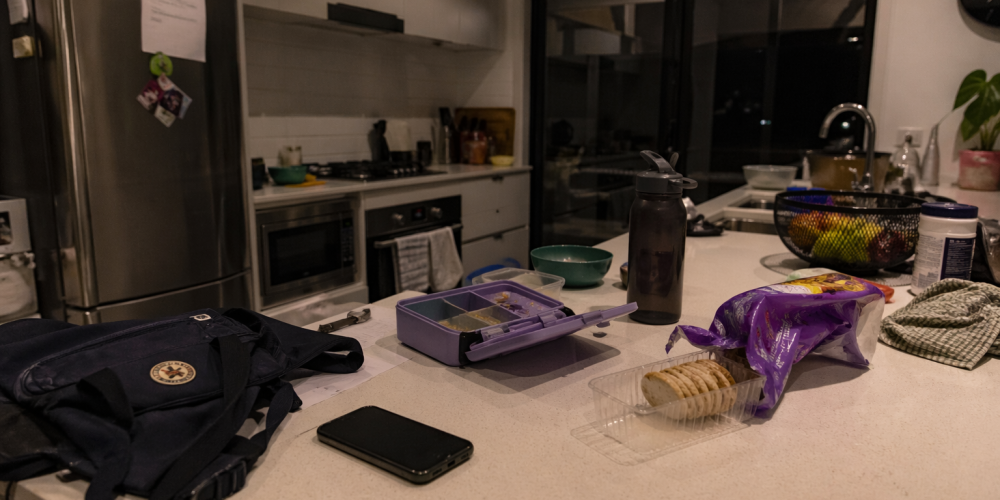
You get home after a long day. School bags get dumped near the door. Someone’s asking what’s for dinner. You haven’t planned anything. You’re tired. You scroll your phone for a minute just to switch off… and suddenly it’s 20 minutes later and you’re even further behind.
So dinner becomes quick, easy, and whatever keeps the peace.
That’s not a food problem.
That’s a setup problem.
And if nothing changes there, nothing sticks long-term.
If this feels familiar, it’s the same pattern behind why most people keep restarting — which is exactly what’s unpacked in Why “Starting Again Monday” Keeps Breaking Your Weight Loss Progress when things feel like they’re slipping again.
The Hard Truth
Here’s where it gets real.
You don’t need to overhaul everything. But you do need to be honest about what’s actually happening.
You’re not inconsistent — your environment is inconsistent.
You’re not lacking willpower — you’re overloaded.
You’re not failing — you’re expecting perfect behaviour in a very imperfect day.
Trying to be “good all week” and then blowing out on the weekend isn’t a discipline issue — it’s an all-or-nothing setup that was never going to hold.
Feeling guilty about your food choices doesn’t fix anything — it just keeps you stuck in the same loop.
Waiting for a perfect week to start again is exactly why you keep restarting.
These patterns don’t mean you’re doing it wrong.
They mean the approach needs to change.
Practical Shifts That Make simple weight loss tips Work
This is where things actually start to click.
Not big changes. Small, repeatable upgrades.
The kind that fit into real life.
1. Build default meals
Stop relying on motivation.
Have 2–3 go-to meals for:
- Breakfast
- Lunch
- Dinner
Simple. Repeatable. Easy to throw together.
Not boring — just reliable.
When your brain’s tired, these carry you.
2. Upgrade, don’t overhaul
Instead of cutting everything out, tweak what you already eat.
- Add protein to meals
- Swap high-calorie extras for lighter options
- Keep your usual meals, just adjust portions
That’s how simple weight loss tips actually stick.
Not by removing everything you enjoy.
3. Reduce decision fatigue at night
Most overeating doesn’t happen at breakfast.
It happens when you’re cooked by the end of the day.
So take pressure off that moment:
- Plan dinner earlier in the day
- Prep something simple ahead
- Have a fallback option ready
If dinner’s sorted, everything feels easier.
4. Change your environment slightly
You don’t need a perfect kitchen setup.
Just make the better choice easier to reach.
- Keep quick protein options visible
- Have easy meals ready to go
- Don’t rely on “I’ll figure it out later”
Because later-you is tired-you.
And tired-you always chooses easy.
This is also where food habits quietly link back to routines and identity, which ties into 7 Healthy Habits You Must Learn when people feel like they’re “falling off” even when they’re trying.
5. Focus on consistency, not perfection
You don’t need a perfect week.
You need a slightly better one than last week.
That’s how simple weight loss tips actually create change.
Not through extremes.
Through repeatable patterns.
At the end of the day, this isn’t about finding the perfect plan.
It’s about building something that still works when life gets messy.
Because life will get messy.
That’s not the problem.
The problem is trying to follow a system that only works when everything’s perfect.
And if you’ve ever felt like you’re doing “okay” but not getting results, chances are your setup just needs tightening — not overhauling.
That’s where the right environment, structure, and support actually make this easier to stick to long-term, which is exactly what Bailey’s Bodies Fitness is built around without turning your life upside down.
The people who get results long-term aren’t more disciplined — they just stopped relying on discipline to carry everything.