
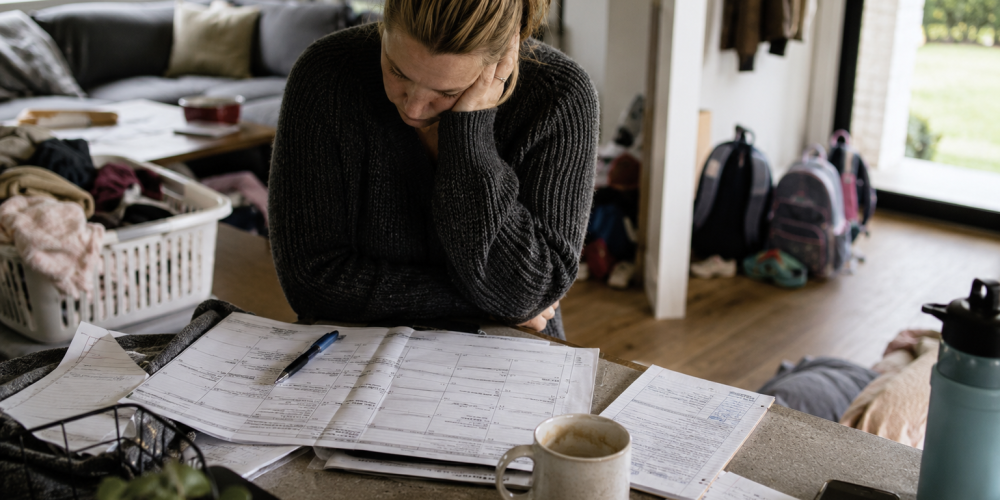
The funny thing about school holidays is that most people blame the actual holidays.
The takeaways. The disrupted routines. The kids being home. The lack of structure.
But honestly…
A lot of people are already running on fumes before the first day even arrives.
By late June, the school bags are still on the floor, permission slips are somehow due tomorrow, work is trying to cram three weeks into two, the washing basket has developed its own ecosystem, and everyone’s already asking what they’re doing over the holidays.
Meanwhile you’re standing in the kitchen eating leftover nuggets cold because lunch never happened properly.
And people wonder why healthy routines disappear.
It’s not usually because somebody suddenly stopped caring.
Most people are carrying more than they realise.
The holidays just expose it.
What Most Advice Gets Wrong
Most advice treats school holidays like a scheduling problem.
Make a meal plan.
Book exercise into your calendar.
Prepare healthy snacks.
Sounds great.
Until Tuesday morning when someone’s sick, the weather changes, the plans change, the shopping hasn’t been done, you’re answering work emails from the car and nobody knows what’s for dinner.
Then the perfectly organised plan lasts about twelve minutes.
The problem isn’t usually knowledge.
Most adults already know what they should be doing.
They’re just tired.
And there’s a big difference.
I’ve watched this happen hundreds of times.
Someone starts June feeling reasonably motivated.
Then winter hits properly. Work gets busy. The family calendar fills up. Sleep gets patchy.
Then school holidays start looming and you can almost see people mentally clock out before they’ve even arrived.
Not because they’re lazy.
Because they’re exhausted.
People keep trying to fix exhaustion with discipline.
That rarely ends well.
Sometimes someone will tell me they’re struggling with food on weekends.
Then we unpack Saturday.
Breakfast was eaten while packing sports gear.
Lunch was whatever was left over from the kids.
Dinner was takeaway because nobody remembered to defrost anything.
There were bits of chips, crackers, half a muesli bar, a couple of chocolates from the pantry and a coffee that somehow counted as a meal.
They genuinely felt like they hadn’t eaten much.
It’s not even always big meals either.
That’s the weird part.
What’s Actually Happening Beneath The Surface
Here’s what most people don’t realise.
Stress changes things fast.
Sleep changes things even faster.
A few rough nights and suddenly the pantry starts sounding like it has opinions.
The foods that seemed easy to ignore on Monday become a lot harder to ignore on Friday night.
Not because you’ve lost willpower.
Your body is simply looking for relief wherever it can find it.
Then winter gets involved.
Cold mornings.
Dark afternoons.
Less movement without even noticing.
People aren’t taking the long walk after dinner because it’s freezing and the couch looks significantly more attractive.
Fair enough.
Eventually the body just goes nah.
Then Sunday afternoon rolls around.
The work laptop appears.
School holiday logistics start floating around in your head.
The shopping list isn’t done.
The laundry isn’t done.
Half the house seems to need something.
And self-care quietly gets bumped to tomorrow.
Again.
Confidence Doesn’t Come First — It Shows Up After You Start
A lot of adults aren’t struggling because they lack motivation.
They’re trying to recover from burnout with takeaway, wine, scrolling and wishful thinking.
That’s a tough fight.
The Hard Truth
You do not need another perfect week.
Feeling guilty is not the same thing as taking action.
If your life is overloaded, adding more rules rarely fixes it.
People spend so much energy feeling bad about what they’re not doing that they have nothing left for what would actually help.
And honestly…
Some people haven’t sat down properly all week.
Others are calling themselves lazy while managing work, family, appointments, shopping, housework and everyone else’s needs.
Most people aren’t failing. They’re cooked.
There’s a difference.
Trying Harder Isn’t Fixing It — Here’s What Actually Is
Practical Shifts That Make This Easier
Instead of trying to maintain your perfect routine through school holidays, aim for your minimum effective routine.
The version you can actually do.
Maybe workouts become shorter.
Maybe walks become the goal.
Maybe dinner isn’t ideal but includes some protein and vegetables most nights.
Good enough counts.
Annoying, but true.
Try protecting a few anchors instead of every healthy habit.
Sleep where you can.
Keep moving most days.
Drink some water.
Eat real food often enough.
The basics are boring.
They also keep saving people.
The goal isn’t staying perfect through school holidays. It’s staying connected to yourself.
Because once that connection disappears completely, everything starts feeling harder than it needs to.
How To Become Someone Who Does Not Quit
If school holidays always seem to throw your routines off course, sometimes the answer isn’t more discipline.
Sometimes it’s having a structure that actually fits real life.
That’s something we spend a lot of time helping people navigate at Bailey’s Bodies Fitness.
Not perfect routines.
Real ones.
The kind that still work when life gets messy.
Because life always gets messy.
And maybe that’s been the problem all along.
A lot of adults aren’t failing during school holidays.
They’re arriving there already empty.